From Paper to Motion: How Origami Inspires Visual Design
"Exploring how origami geometry, crease patterns, and paper folding principles inform modern 2D animation, motion graphics, and logo transformation."
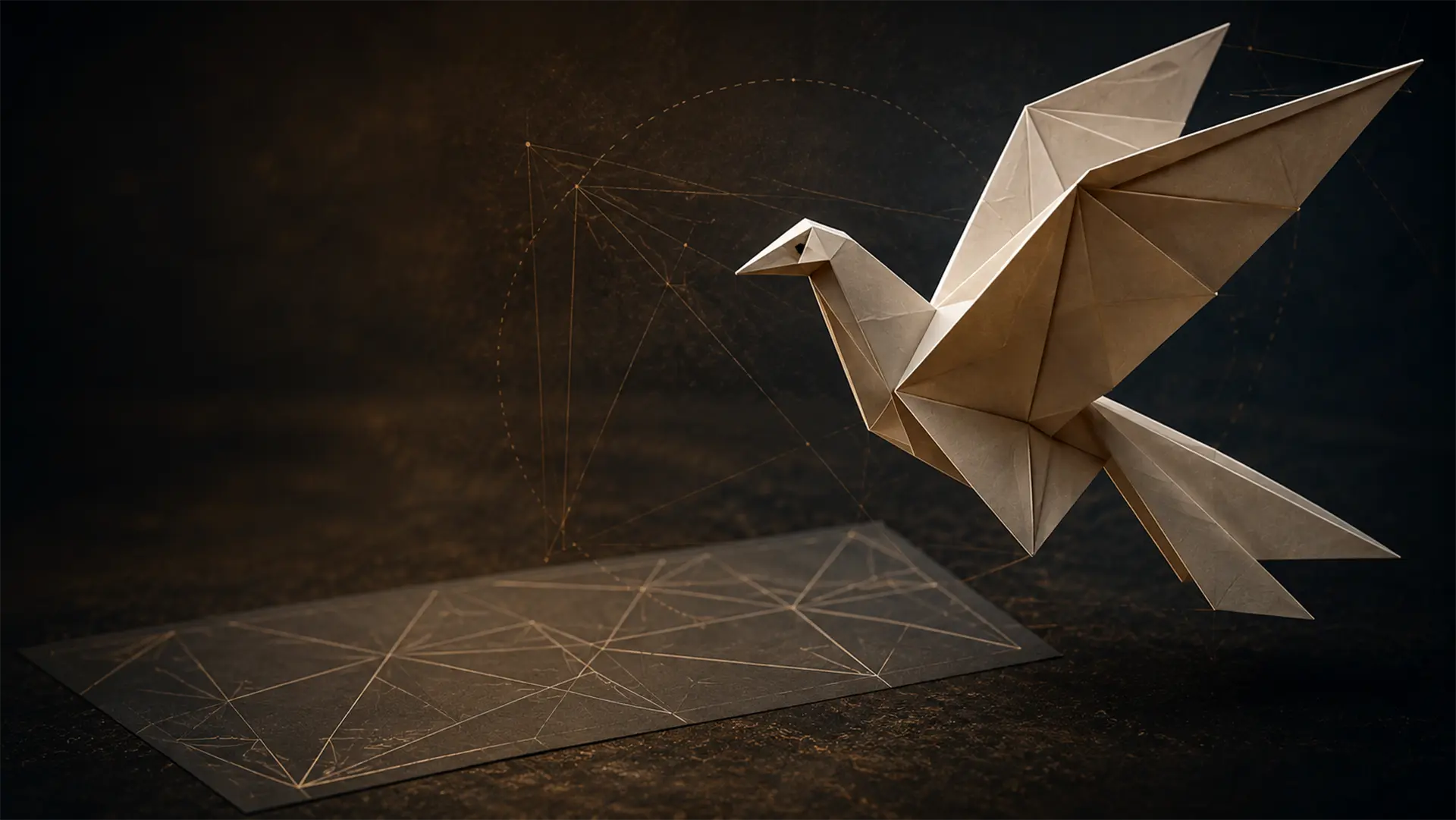
Origami is often associated with the simple act of folding a sheet of paper into a recognizable form. But behind that apparent simplicity is a visual language built on geometry, structure, transformation, and movement.
A flat sheet can become a bird, a flower, an animal, or an abstract geometric form through a carefully considered sequence of folds. The transformation is what makes origami particularly interesting from a visual design perspective: the final shape is not simply revealed; it is constructed through movement.
For motion designers, this creates an especially rich source of inspiration.
The Geometry Behind the Fold
An origami form begins with a flat surface and a system of creases. These crease patterns define how different sections of the paper can move in relation to one another, allowing a two-dimensional surface to develop into a three-dimensional structure.
This relationship between a flat starting point and a dimensional final form is one of the fundamental characteristics that makes origami visually compelling.
A fold can divide a surface, create an edge, change the direction of a plane, or introduce an entirely new silhouette. When several folds work together, relatively simple geometric elements can produce surprisingly complex structures.
This is also why origami has become a subject of interest beyond traditional paper craft, including geometry, computational design, architecture, robotics, and animation. Researchers have developed mathematical and computational approaches to model folding patterns and generate realistic folding motion.
From Static Form to Movement
The real visual potential of origami appears when the folding process itself becomes part of the design.
Instead of showing a finished object, motion design can reveal how that object comes into existence.
- A flat shape can begin to fold.
- One surface can rotate around a crease.
- Several planes can move in sequence.
- A simple geometric form can gradually become a recognizable symbol.
This creates a natural visual narrative: flatness becomes structure, structure becomes form, and form becomes identity.
The logic of the movement is important. Origami does not normally transform through arbitrary deformation. Its visual character comes from the relationship between folds, planes, edges, and the order in which they move. Translating these principles into animation can therefore produce movement that feels intentional and structurally motivated rather than simply decorative.
Why Origami Works in Motion Design
Origami offers several qualities that are particularly useful for motion graphics and brand animation:
- Transformation: The transition from a flat sheet to a recognizable form creates an immediate sense of transformation. This makes folding an effective visual metaphor for ideas such as change, development, construction, and discovery.
- Geometry: Origami naturally introduces geometric relationships into a composition. Planes, angles, symmetry, repetition, and intersections can all become part of the visual language of a motion piece.
- Simplicity: A single sheet of paper can contain a surprisingly complex visual system. This allows designers to create sophisticated movement while maintaining a relatively simple visual vocabulary.
- Rhythm: Folding can happen gradually, rapidly, sequentially, or simultaneously. The timing of individual folds creates rhythm, which can then be synchronized with sound, music, or other elements of a motion identity.
- Reveal: A fold can hide one form while revealing another. This makes origami particularly effective for logo animation and visual identities where the final mark needs to emerge naturally from the animation.
Origami as a Motion Identity
The connection between origami and branding becomes particularly interesting when a logo or symbol can be constructed through folding.
Rather than simply making a logo appear on screen, the animation can explain its visual logic. A shape can begin as a simple surface, transform through a series of folds, and eventually resolve into the final identity.
In this approach, motion is not added after the identity has been designed. Motion becomes part of the identity itself. This is especially valuable for motion logos, where a short animation needs to establish a memorable visual idea within a limited amount of time. The folding process can provide that idea while also giving the animation a clear beginning, development, and conclusion.
Translating Origami into Digital Animation
Recreating the visual language of origami digitally requires more than simply applying a paper texture to a three-dimensional object. The important part is the logic of the transformation.
The planes need to maintain their relationship to the crease structure. The movement of one section can affect the position of another, and the sequence of folds needs to feel physically and visually coherent.
This is one reason origami animation can be deceptively difficult. A convincing fold depends on geometry, timing, hierarchy, and the relationship between multiple surfaces. Even early computer animation research treated origami folding as a geometric motion problem rather than simply interpolating between two images.
For motion designers, this creates an interesting balance between technical precision and creative interpretation. The result does not necessarily need to reproduce physical paper perfectly. What matters is preserving the visual logic that makes the transformation believable.
The Arkadia Project
The Arkadia motion logo explores this relationship between folding, transformation, and visual identity.
For the project, the central visual idea was an origami-inspired bird. The concept provided a natural way to transform the symbol through movement while connecting the identity to a recognizable physical process.
Artafen Studios developed the project as a 2D motion graphics piece, working across storyboarding, direction, frame-by-frame animation, clean-up, color design, sound design, compositing, and editing.
The origami concept became more than a decorative visual reference. It provided the underlying movement logic for the identity: a form develops through a sequence of transformations before resolving into the final logo.
This approach allowed the motion logo to connect the static identity with a sense of movement and transformation, giving the brand mark a visual story of its own.
See the Arkadia Motion Logo project to explore the production process and final animation.
Beyond Paper
One of the most interesting aspects of origami is that its visual language does not depend on paper alone.
The underlying principles—folding, transformation, geometry, structure, and controlled movement—can be translated into many forms of visual communication. They can inspire a logo animation, a title sequence, a product reveal, an ident, an illustration, or an entire visual system.
For motion design, this makes origami more than an artistic technique. It becomes a way of thinking about transformation.
A flat surface can become a three-dimensional form. A simple shape can become a recognizable symbol. And a static identity can become a moving story.
That transition from form to movement, and from movement to meaning is where origami becomes particularly powerful as a source of inspiration for visual design.
Reviews & Ratings
User Reviews
No reviews yet. Be the first to share your experience!
Related Journal Entries
The Role of Indigenous Myths in Contemporary Animation
Native legends and archetypes serve as cultural anchors, enabling animation to convey timeless human truths through universal visual language.
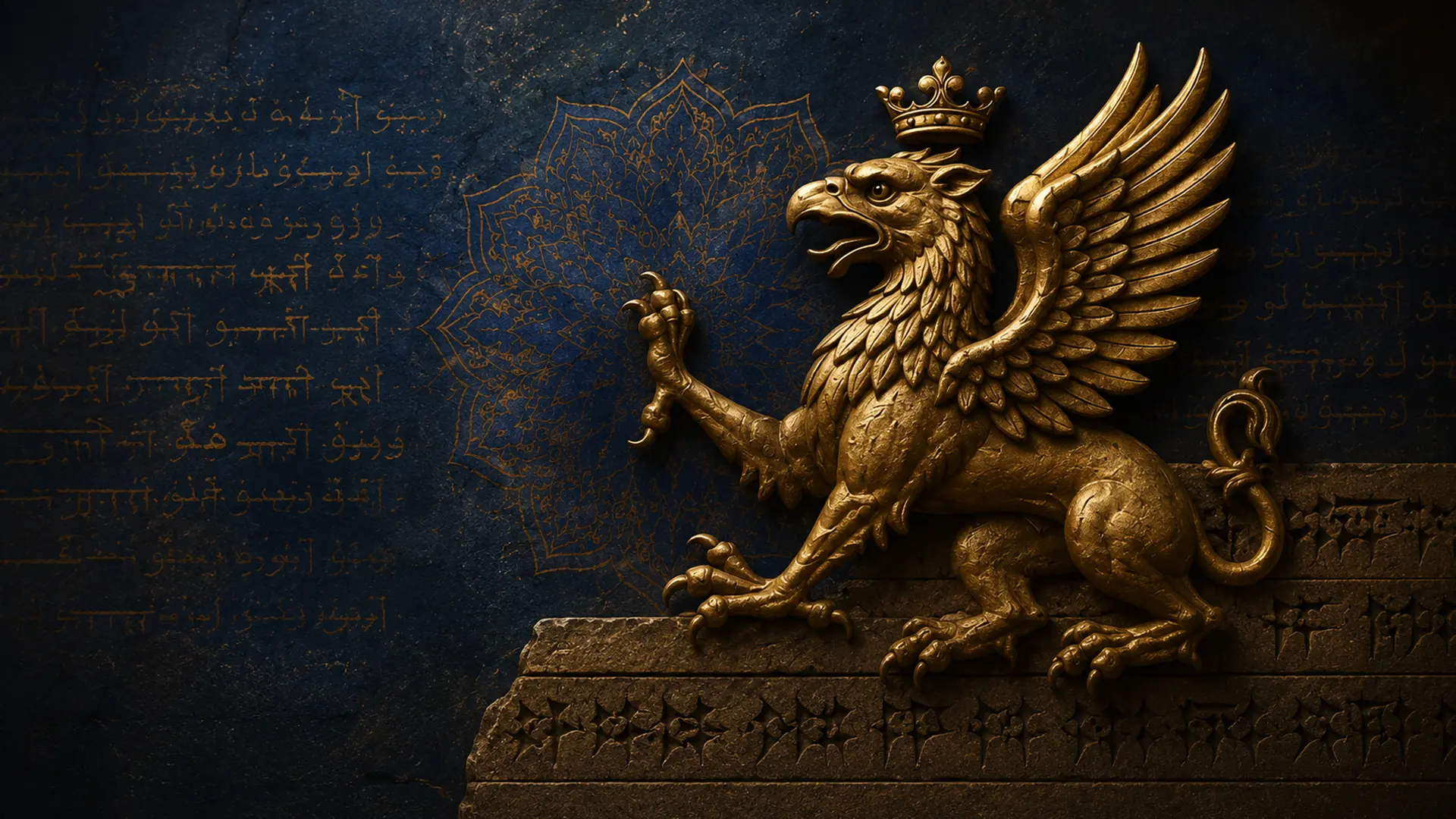
From Heritage to Motion: Persian Symbols in Contemporary Visual Design
Exploring how historical Persian symbols, cuneiform inscriptions, and mythological creatures like the griffin are reinterpreted into modern motion design identities.